Proving it is the service line
The house is isolated from the meter and the two sides are watched separately. That rules out irrigation, the pool fill and everything inside before a shovel is discussed.
The buried pipe between your meter and your house belongs to you, and while it leaks you are paying for every gallon it loses into the dirt. An independent plumber can confirm the loss is on your side of the meter, narrow down where the line gave out and price both the trench and the no-dig replacement before anyone breaks ground.
There is a check you can run before anyone comes out. Turn off the irrigation timer and the pool auto-fill, shut the valve where the supply enters the house at the front, then look at the meter at the curb. If the dial is still creeping, water is escaping between the meter and that valve, which is the buried service line. Open the meter box lid slowly and look before you reach in, because those boxes make good shelter for insects and snakes.
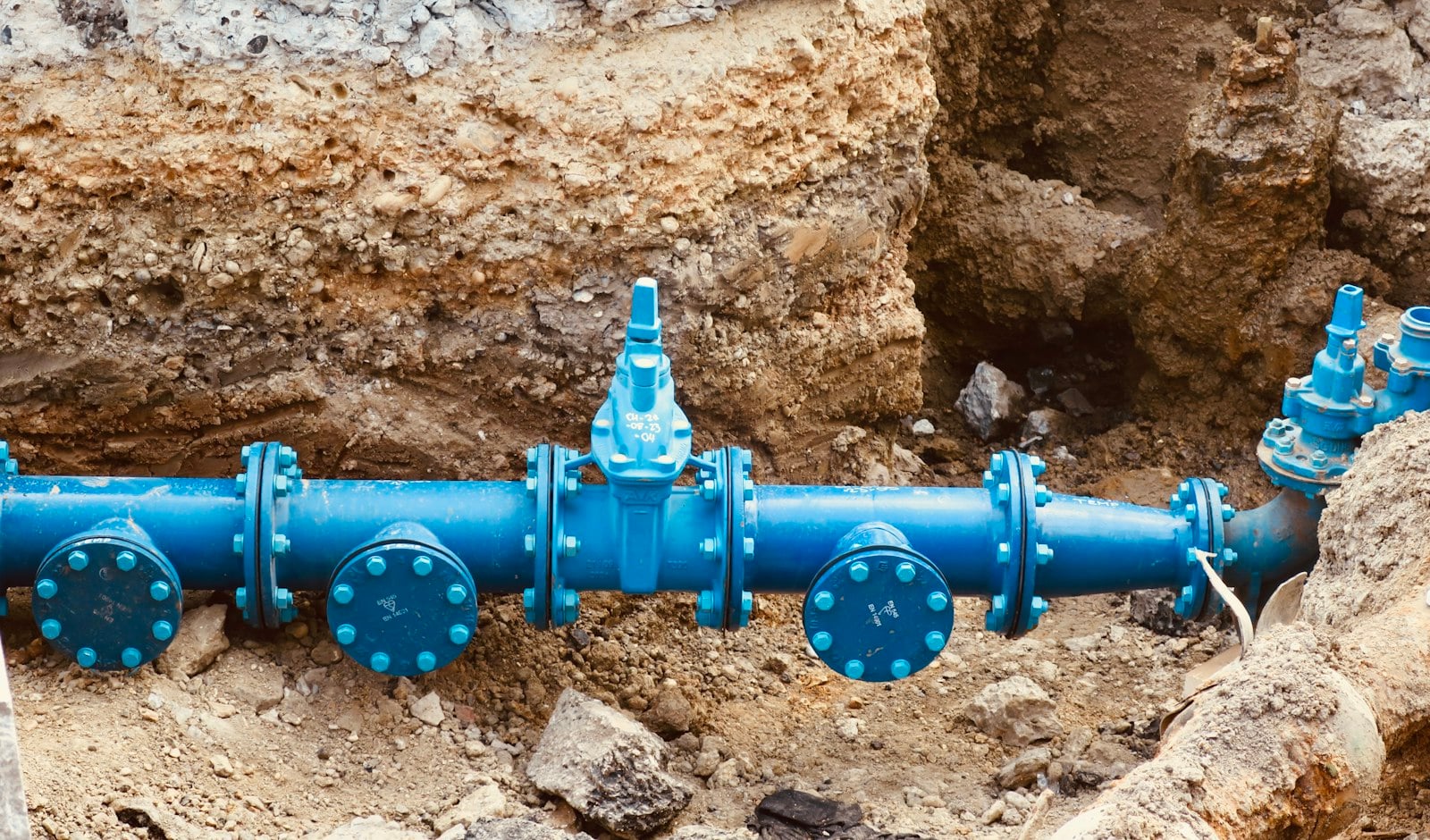
Replacing a service line is trenching work, so the order matters: prove the leak, find the pipe, then choose the method.
The house is isolated from the meter and the two sides are watched separately. That rules out irrigation, the pool fill and everything inside before a shovel is discussed.
The path from the meter to the house is traced and marked on the surface, and the escape is narrowed by listening along the run, so any excavation starts where the pipe actually is.
Arizona law requires buried utilities to be located before digging, so the Arizona 811 request goes in and the marks are honored. It also protects your own irrigation and low-voltage lines.
A trench to the failure, the damaged length cut out and new pipe put in. This suits a short run, a single clear break, or a route that passes under nothing you mind disturbing.
New pipe pulled along or beside the old path from a small pit at each end. It spares driveways, block walls and desert landscaping, though not every route or every existing pipe allows it.
The new line is connected at both ends, held under pressure and flushed until the water runs clear. The quote says in advance who puts back concrete, pavers, gravel and any irrigation crossed on the way.
Service lines here fail by age and by soil, not by frost. In the central neighborhoods, a line laid when the house was built in the 1940s, 1950s or 1960s may be galvanized steel, and galvanized closes up from the inside as it corrodes. That produces years of poor pressure before it ever produces a puddle, which is why a house with weak flow everywhere is worth testing at the meter rather than at the faucets. Copper service lines fail the other way around, thinning from the outside where the surrounding soil is aggressive, until a pinhole opens and the yard quietly takes the water.
Digging conditions are their own cost driver. Caliche, the hard cemented layer sitting under a great many lots in this area, turns what looks like a short trench into slow work and often decides whether an open cut or a pull-through replacement is the better value. On the newer subdivisions out toward Rita Ranch, Vail and Marana the pipe itself is usually modern plastic, but the run from the street to the house can be long, shallow in places, and crossing ground that shifts as it dries out and then takes on a monsoon downpour all at once.
Two things confuse these calls more than anything else. The first is irrigation: drip lines, a pool auto-fill and a hose bib on a timer all leak into the same dirt as a service line and look identical from the surface. The second is scale. Hard water leaves mineral deposits through older supply plumbing, so low pressure is sometimes a pipe problem inside the walls rather than a failing main. Both get ruled out by isolating sections and testing, which is cheaper than replacing the wrong thing.
If the pressure trouble turns out to sit inside the house, start with leak detection. A line that has already split and is spraying belongs under burst pipe repair, and water surfacing through the floor rather than the yard is covered on our slab leak repair page. Older central homes with original service pipe are described on our Midtown Tucson plumbing page, the same repair-or-replace reasoning applied to hot water is on our comparison page, and you can call the number at any point.
The usual dividing line is the meter: the utility owns the main in the street and the meter itself, and the property owner owns the line running from the meter to the house. So a wet spot on the street side is a call to the utility, and a wet spot on the house side is a repair you arrange. Ask the independent plumber to check which side is losing water before quoting anything, and to tell you plainly if the problem is not yours to fix.
It follows the ground more than the pipe. Length of the run, depth, how much caliche is in the way, what the line passes under, whether a single break can be cut out or the whole run should be replaced, and who restores the surface afterward all move the figure. Ask the independent plumber to price the realistic options next to each other after locating the line, so you are choosing between known jobs rather than approving an estimate blind. See how a service call works.
Often, yes. A trenchless pull needs only a pit at each end and leaves the driveway, walls and landscaping between them alone. It depends on the route being clear enough to pull through and on what the existing pipe is, so it is confirmed after the line is located, not promised beforehand. Ask for the trenchless price and the open-cut price together.
Not long, and the reason is not only the bill. Water running under a slab, a driveway or a block wall footing washes fine material out of the soil, which is how a small leak turns into settlement and cracked paving. Pressure loss can also let dirt work into the line. Get it confirmed quickly even if you then take a few days to choose a repair method. Read how the system gets isolated and tested.
When you call, say what the meter is doing with the water off, and where the ground stays wet.